Author: Admin
Moving Away From Coal



0 Comments
FOR decades, coal has powered India’s economic growth, illuminated millions of homes and
underpinned country’s energy security. Yet, as the perils of climate change intensify and extreme
weather events become more frequent, the country faces a difficult question: how does it move away
from the very resource that has underpinned its economic rise?While ensuring energy security
remains indispensable, commitments to achieving net-zero emissions by 2070 have emerged as
equally critical national priority. Beyond such commitments, the emergence of carbon entrenched
trade measures like Carbon Border Adjustment Mechanism (CBAM) has become an additional
compulsion to drive the country towards a low carbon growth trajectory. While India has repeatedly
reaffirmed its climate commitments on the global stage, however, the most challenging part of this
commitment is centered around the distortions resulting from distancing away from a coal-based
economic structure and system.Switching away from coal: easier said than doneThe drive to switch
away from coal as well as finding a cost-effective and an efficient alternative to coal is not only a
difficult choice, but also a time- consuming proposition. Coal contributes around 70 per cent of
electricity generation in India and 55 per cent of primary electricity supply. Beyond concerns of energy
security, the prospects of widespread job and livelihood losses across the coal value chain pose a
particularly serious challenge. As per estimates, around 13 million workforce depends on the coal value
chain, directly and indirectly. Navigating the coal phase down is a complex process, therefore it is even
more imperative to carefully map the sectors, geographies and industries that are most at risk of such a
coal retreat.Coal generates substantial revenue for government. It stands as the single largest
contributor to railway freight, around 49 per cent of total freight income. Additionally, coal sector
contributes over Rs 70,000 crore annually to government through royalties, taxes and other
levies.Once coal retreats, filling such void will require significant efforts as this fossil fuel does not only
fuel the power sector, it has invisible economic footprints across sectors and geographies. It presents
India an opportunity to undertake systematic assessment of which sectors and geographies are
dependent on it and to what extent.Indian industrial sector contributes one-fourth to India’s Gross
Domestic Product; however, it also emits 30 per cent of national emissions. This black diamond has a
significant share of around 67 per cent in total fuel consumption in energy intensive industries.
National climate commitments and emergence of regulatory regimes such as CCTS (Carbon Credit
Trading Scheme) and ESG (Environmental, Social, and Governance) regulations such as BRSR
(Business Responsibility and Sustainability Reporting) along with international trade measures such
as CBAM are likely to affect the competitiveness of Indian industries in case of continued reliance on
coal.Hence, India is on the horns of a dilemma – till when to continue with coal and start discontinuing
at what rate. So far most of the growth of renewables is supplementary in nature, taking care of
additional energy demand.Emerging risk of stranded assets; long shadow of coal sectorThe energy
transition is not merely an environment challenge per se but also a question of development for the
country. The complexity of switching away from coal accentuates as coal is mostly used for critical
sectors of importance for the country such as power sector, steel and cement sector. Power sector uses
almost 1/4th of coal, iron and steel sector uses about 10 % of the coal and aluminum sector makes use
of 7 to 8 % of the coal. While coal gasification offers an alternative cleaner option compared to direct
use of coal, however, repurposing coal use in the critical sector requires structural shifts and could
produce stranded assets.In the Indian context, substantial investments have been made in coal mines,
thermal power plants and coal-based industrial technologies, many of which are designed to operate
for several decades. Over the past five years alone, capital expenditure within coal sector in Public
Sector Undertakings have averaged around Rs 18,255 crore annually.A faster than anticipated
transition away from coal could render these assets underutilised or economically unviable. This risk is
particularly acute for India’s coal fleet, most of which are young. Stranded assets risk in the industrial
sector is also pronounced as sectors such as steel, cement, and aluminium have invested heavily in
coal-based infrastructure, including captive coal power plants, boilers, furnaces and long-term coal
supply arrangements. For instance, available statistics show that close to 60 % of the captive power
plants (CPPs) run by using coal and repurposing of such plants is not easy as these plants are mostly
young and repurposing would lead to significant loss of their asset values. Similarly, replacing coal in
hard-to-abate sectors like steel and cement could be highly challenging.What India must doIndia’s
energy transition cannot be reduced to replacing one source of energy with another. It must also
involve managing the social, economic and fiscal consequences of coal decline. It is crucial to design
the sectoral trajectories for the net zero, instead of relying on the uniform target for the country. The
rate and speed of transition shall be based on the sectoral configurations and sectoral specificities, to
better cater to the sectoral needs.This requires carefully crafting the transition pathways and deciding
the rate of transition. The most important consideration is developing a national coal dependency
atlas, preparing sector specific transition pathways and diversifying coal-dependent regional
economies These should therefore become central pillars of India’s transition strategy. Without such
planning, the costs of coal retreat may be unevenly distributed, undermining both climate ambition
and developmental gains.Views are personal
Event Gallery
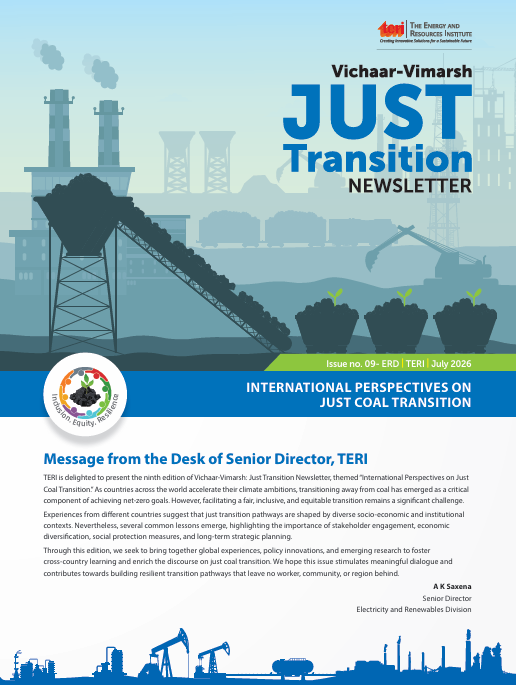
International Perspectives on Just Coal Transition
0 Comments
This edition brings together global experiences, policy innovations, and emerging research on just coal transition, highlighting lessons from different countries on stakeholder engagement, economic diversification, social protection, and long-term transition planning.
Event Gallery
Leave a Reply
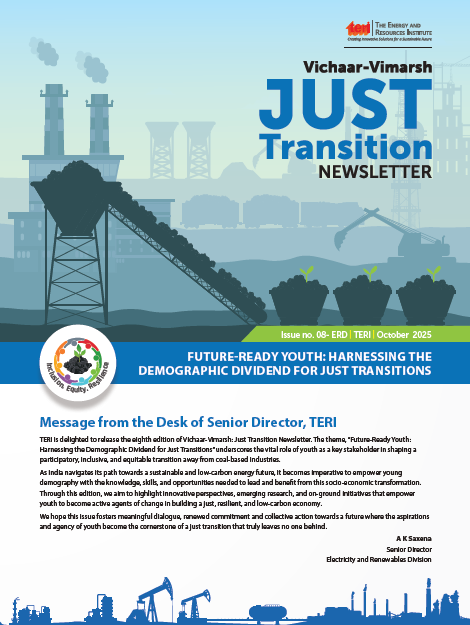
FUTURE-READY YOUTH: HARNESSING THE DEMOGRAPHIC DIVIDEND FOR JUST TRANSITIONS
0 Comments
The eighth edition of Vichaar-Vimarsh: Just Transition Newsletter, themed “Future-Ready Youth: Harnessing the Demographic Dividend for Just Transitions” underscores the vital role of youth as a key stakeholder in shaping a participatory, inclusive, and equitable transition away from coal-based industries.
As India navigates its path towards a sustainable and low-carbon energy future, it becomes imperative to empower young demography with the knowledge, skills, and opportunities needed to lead and benefit from this socio-economic transformation. Through this edition, we aim to highlight innovative perspectives, emerging research, and on-ground initiatives that empower youth to become active agents of change in building a just, resilient, and low-carbon economy.
Event Gallery
Leave a Reply
ENERGY EQUITY: A PATHWAY TO JUST TRANSITION
0 Comments
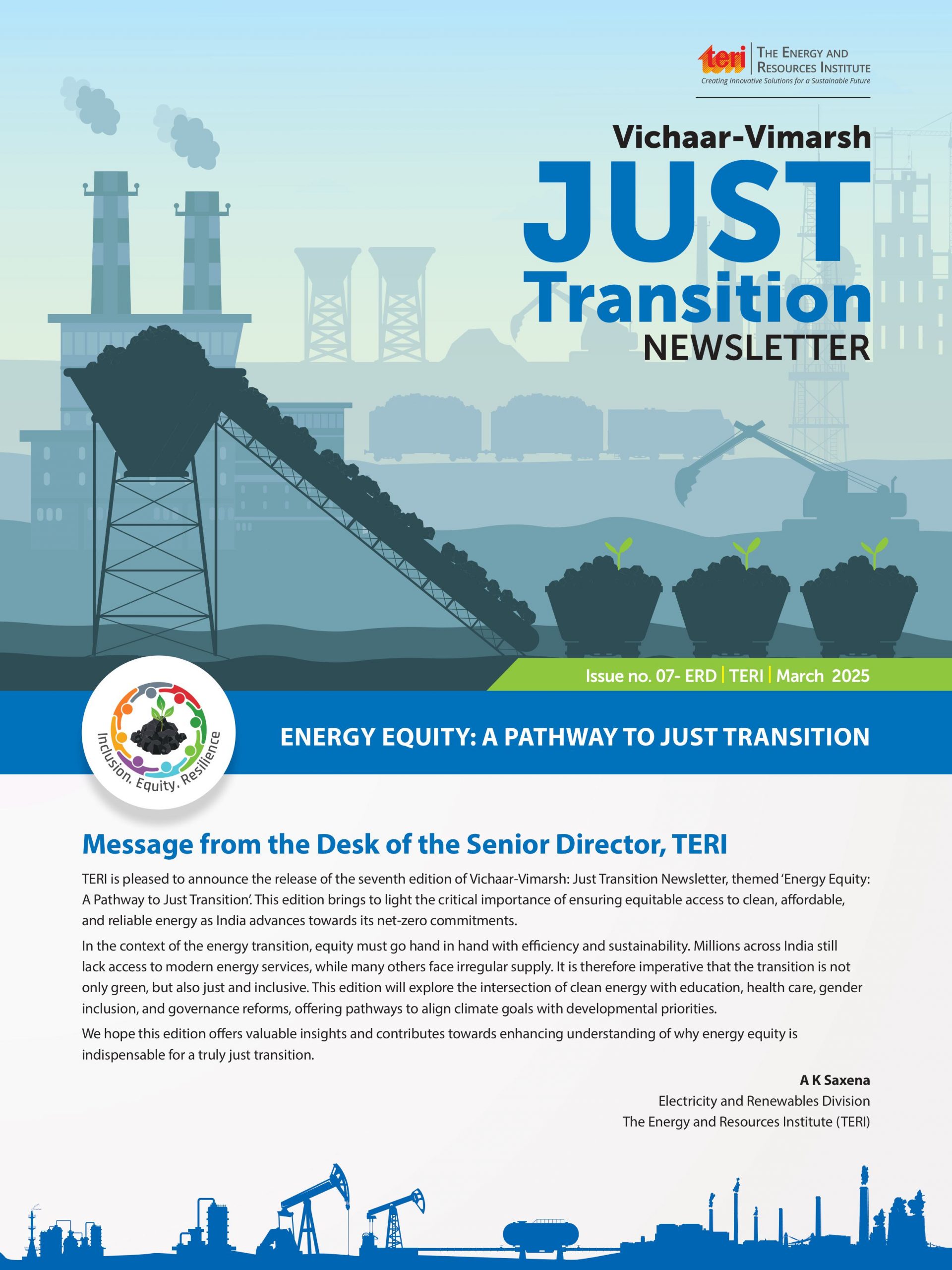
The seventh edition of Vichaar-Vimarsh, TERI’s bi-annual newsletter on just transition, focuses on the critical theme of energy equity. As India advances on its net-zero pathway, ensuring clean, affordable, and reliable energy access for all remains a key challenge and opportunity. This issue highlights how equitable energy access intersects with gender inclusion, public services like education and healthcare, and governance reforms. It also explores the need for economic diversification in coal-dependent regions to ensure no one is left behind. Featuring contributions from practitioners, researchers, and policymakers, the newsletter offers grounded perspectives on shaping a people-centric, inclusive energy transition.
Event Gallery
Leave a Reply
Understanding the Implication of Coal Transition: The Scenario in Chhattisgarh, Jharkhand, and Odisha

0 Comments
India’s pledge to attain net-zero emissions by 2070 significantly impacts coal-reliant people, especially in the states of Chhattisgarh, Jharkhand, and Odisha. The report “Understanding the Implication of Coal Transition” analyses the socio-economic vulnerabilities resulting from coal mine closures and the ensuing reduction in coal-dependent lifestyles. The study, conducted by The Energy and Resources Institute (TERI) with assistance from the MacArthur Foundation, utilises a mixed-method research strategy comprising community interviews, Focus Group Discussions (FGDs), and socio-economic surveys. This methodology guarantees a thorough evaluation of the complex issues encountered by coal-dependent communities, examining their effects on human capital, natural resources, infrastructure, social networks, and financial stability.
The findings indicate that the shift from coal entails considerable socio-economic upheaval, with job losses and environmental deterioration identified as major issues. The research underscores diminishing employment prospects, insufficient healthcare infrastructure, water pollution, and land degradation as key vulnerabilities exacerbating the problem for coal-dependent communities. These obstacles are classified within the Five Capitals Framework—Human, Natural, Physical, Social, and Financial—each signifying essential aspects of resilience and vulnerability. The report recommends a set of specific initiatives to enable a Just Transition. Essential recommendations encompass reskilling initiatives for displaced workers, financial inclusion strategies to facilitate alternative livelihoods, environmental restoration projects, and gender-sensitive policies to promote inclusive development. The study emphasises the necessity of a participative and equitable transition plan that protects impacted communities while furthering India’s clean energy objectives through the integration of these measures.
Event Gallery
Leave a Reply
PILOT INITIATIVE FOR A PEOPLE-CENTRIC TRANSITION IN GIRIDIH, JHARKHAND
0 Comments
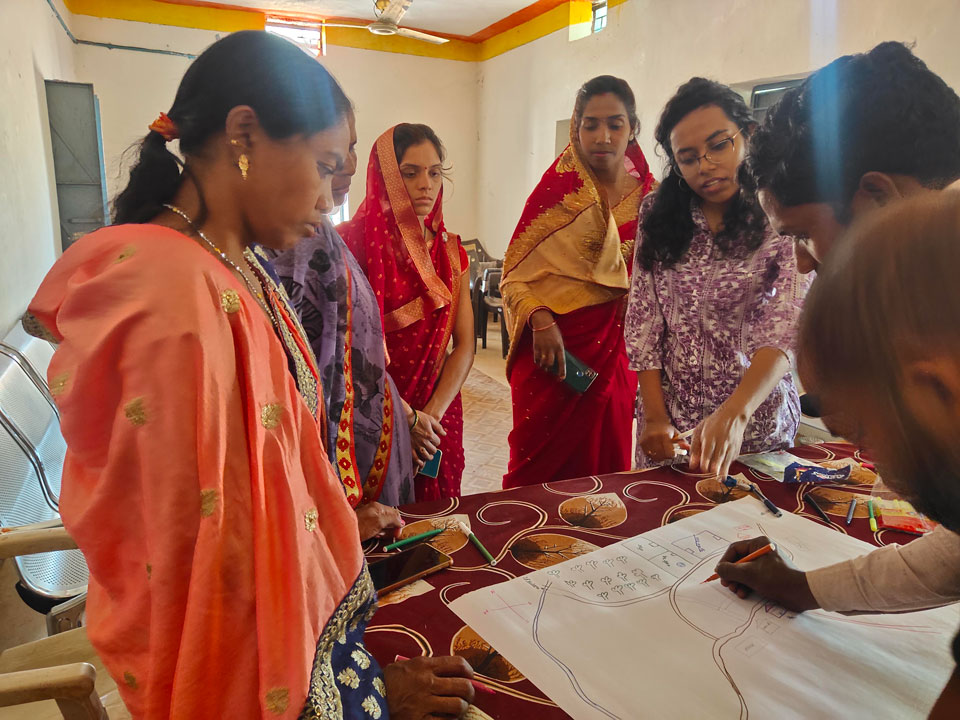
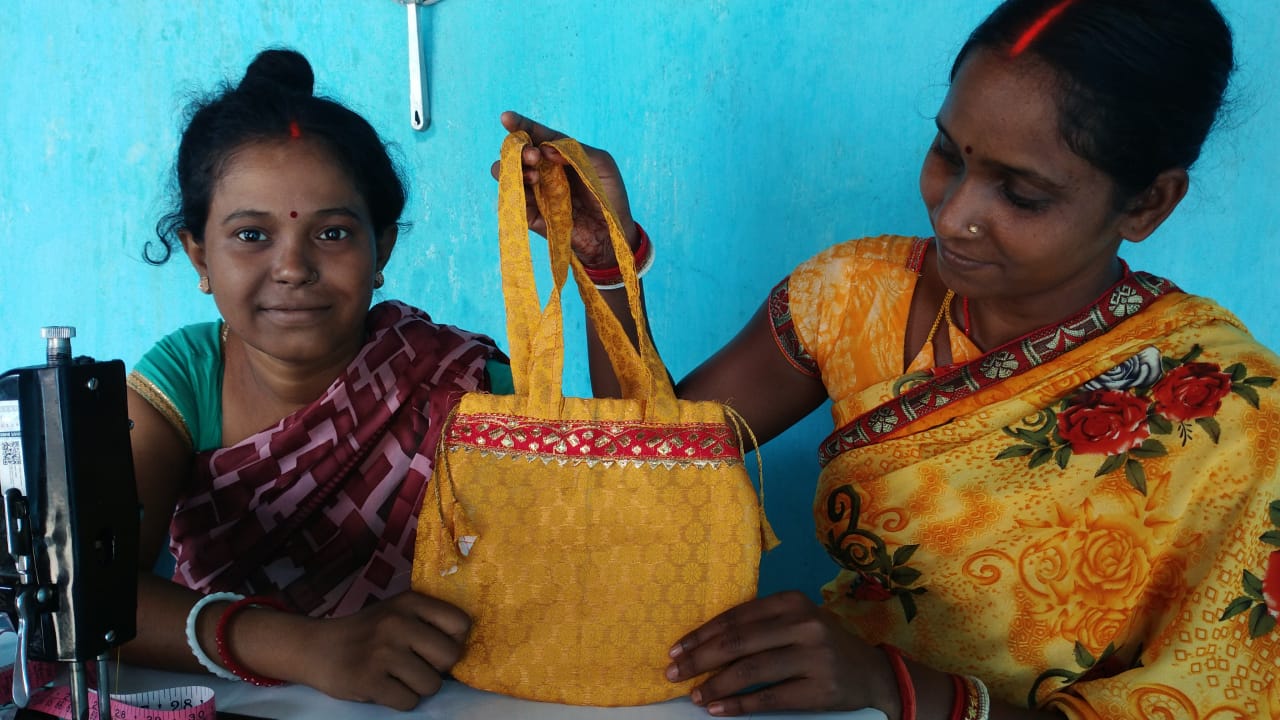
We are proud to share that during the past five months, we’ve made a relentless effort in testing an idea of economic diversification in the coal belt region of Giridih, Jharkhand. We created a pathway for putting our words into action to demonstrate how a successful transition away from fossil fuels could be realized. This pilot was specifically aimed at women and adolescent girls in the Giridih open cast and Kabribad coal mines, whose lives are intrinsically linked with the local coal economy. The target group was females between 18-45 years of age who had basic reading, writing, and numerical skills. The objective was to impart both technical and soft skills to them, enabling them to plan their entrepreneurial journey. Through this intervention, we aimed to make them future-ready by enhancing their skills, which would, in turn, build their confidence and help them establish themselves as self-reliant business entrepreneurs.
As part of the well-thought-out strategy, around 160 women (40 from each gram panchayat—Kongdi and Karharbari from Giridih OC, and Chilga and Tikodih from the Kabribad mining area) were selected and provided with financial literacy training. This was done using workbooks on basic financial concepts such as income, savings, loans, and investments. From this larger group, 80 women were selected to participate in a business generation idea workshop. During this workshop, they brainstormed and discussed potential businesses that could survive and thrive in the region, while also learning about the requisite qualities to sustain these activities. This was followed by a rigorous market mapping exercise to understand the market’s demand-and-supply potential and to gauge the competitive landscape.
Once this was completed, a total of 60 women were selected for the next phase, which involved technical training for business start-ups. During this phase, they were imparted skills to start manufacturing products that have demand in the local market. The women short-listed making products like incense sticks, mops and wipers, home décor items such as cushions and designer bags, as well as beautician training, as potential business ideas. They were provided with machines for collective use to manufacture incense sticks and mops/wipers and taught how to operate these. Similarly, training was provided for stitching designer bags and running beauty parlors. Local trainers were hired to impart the necessary skills to these women.
In the final stage, 49 women came forward to join this collective effort through the formation of Joint Liability Groups (JLGs) at NABARD and started their businesses. Special effort was made to establish connections with the market, vendors were identified, and work orders were procured to create a sustainable supply chain. We are immensely proud to share that five types of enterprises were started by these women: incense stick production, mop and wiper manufacturing, production of home décor items such as handicraft cushions, cloth and jute bag production, and beauty and wellness services. These enterprises include four group enterprises and eight individual start-ups.
The effort put in over these past months has brought to the forefront stories of confidence, success, and the willingness to lead a life different from before—a life of improvement and betterment. The women wake up with a renewed hope of an alternative reality—a reality they are shaping themselves. They have mentioned how this initiative has instilled in them a sense of purpose and drive. We’re glad to note that this newfound voice and dignity have enabled them to make their own decisions and move forward with this pilot initiative.
Event Gallery
Leave a Reply
Coal Dependence: Lives in an Extractive Economy Photo Exhibition
0 Comments
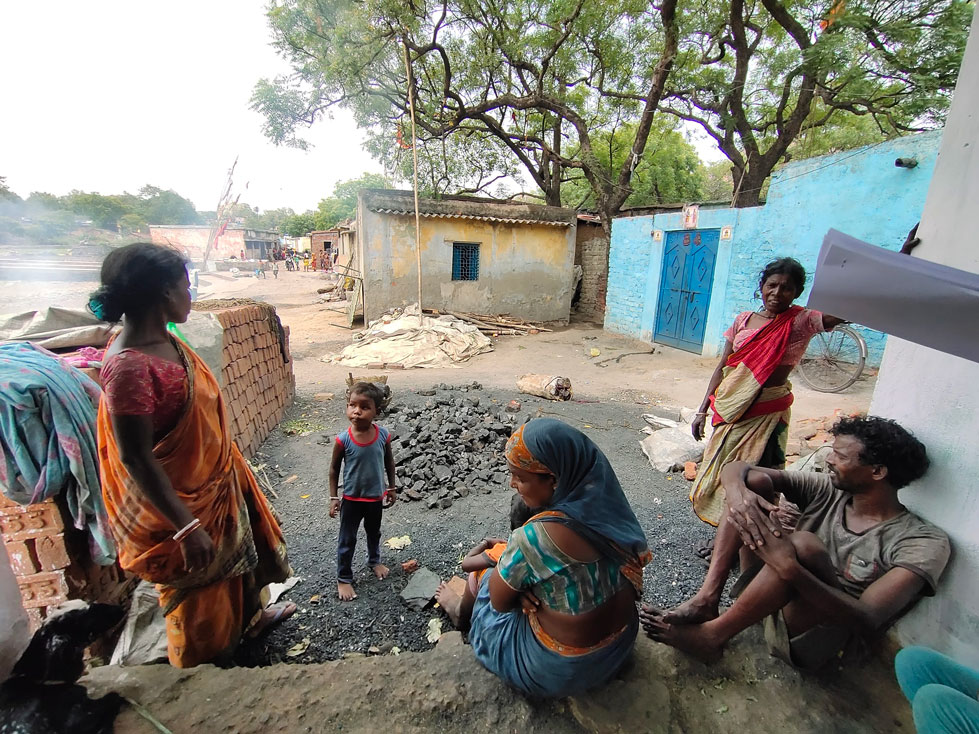
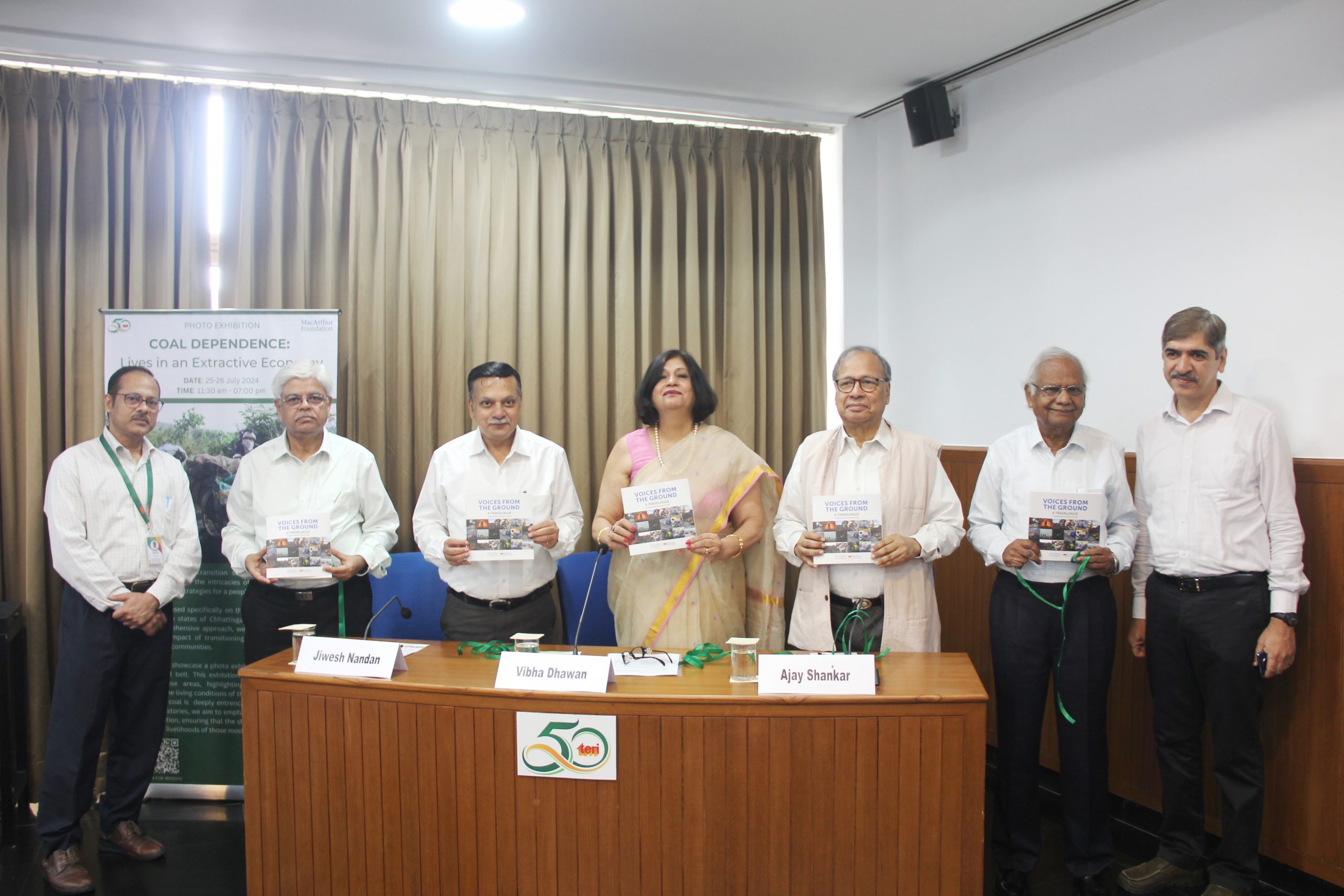
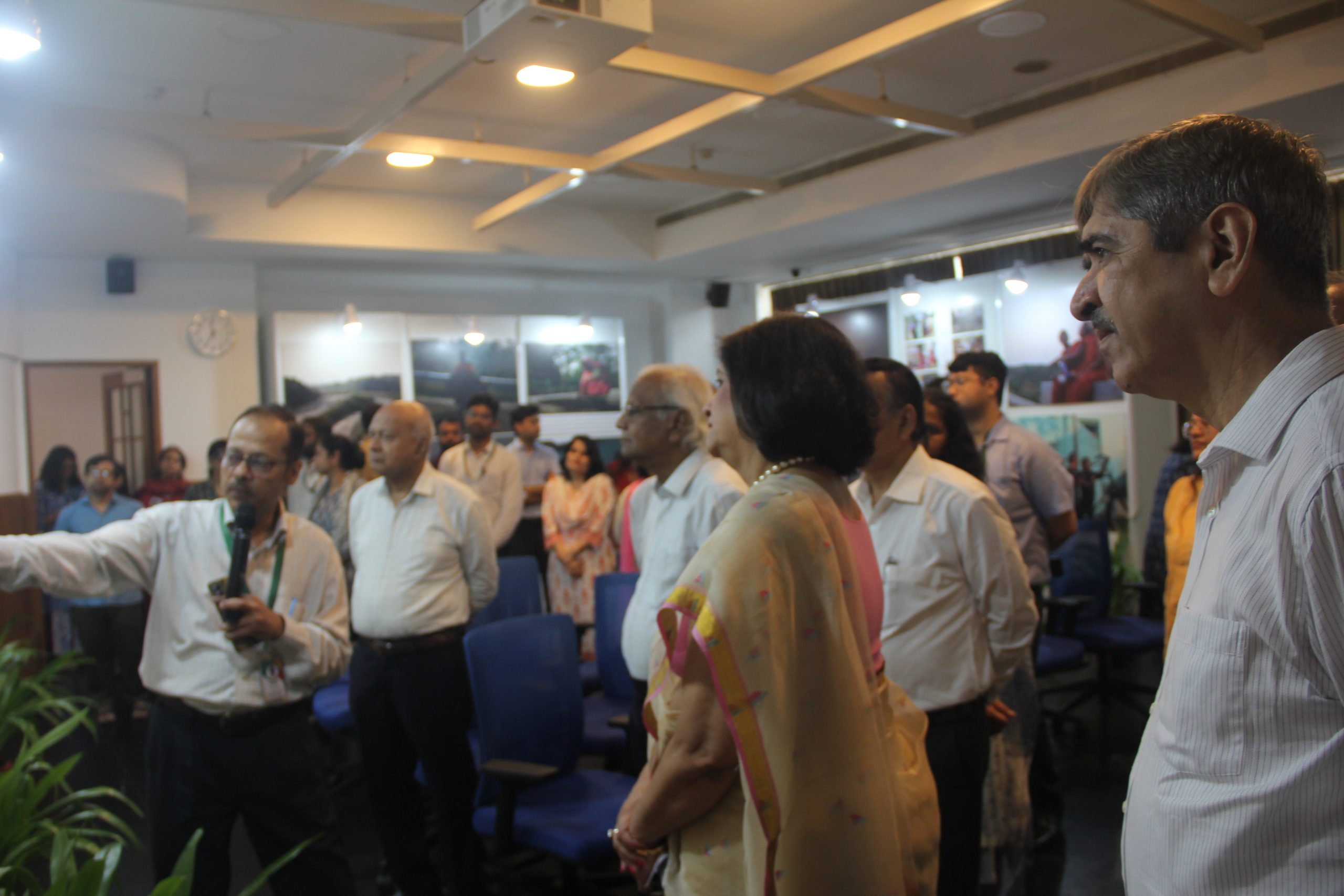
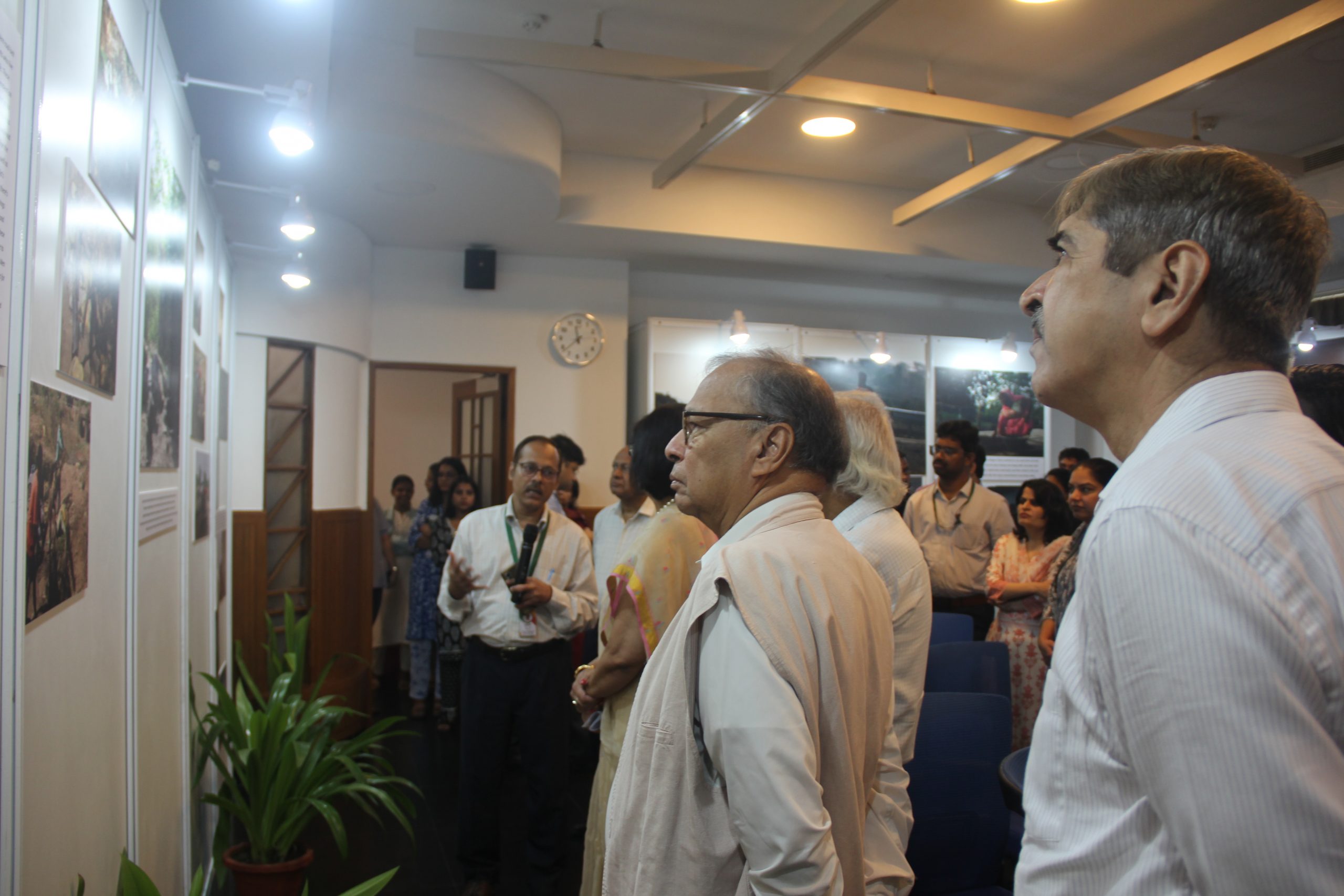
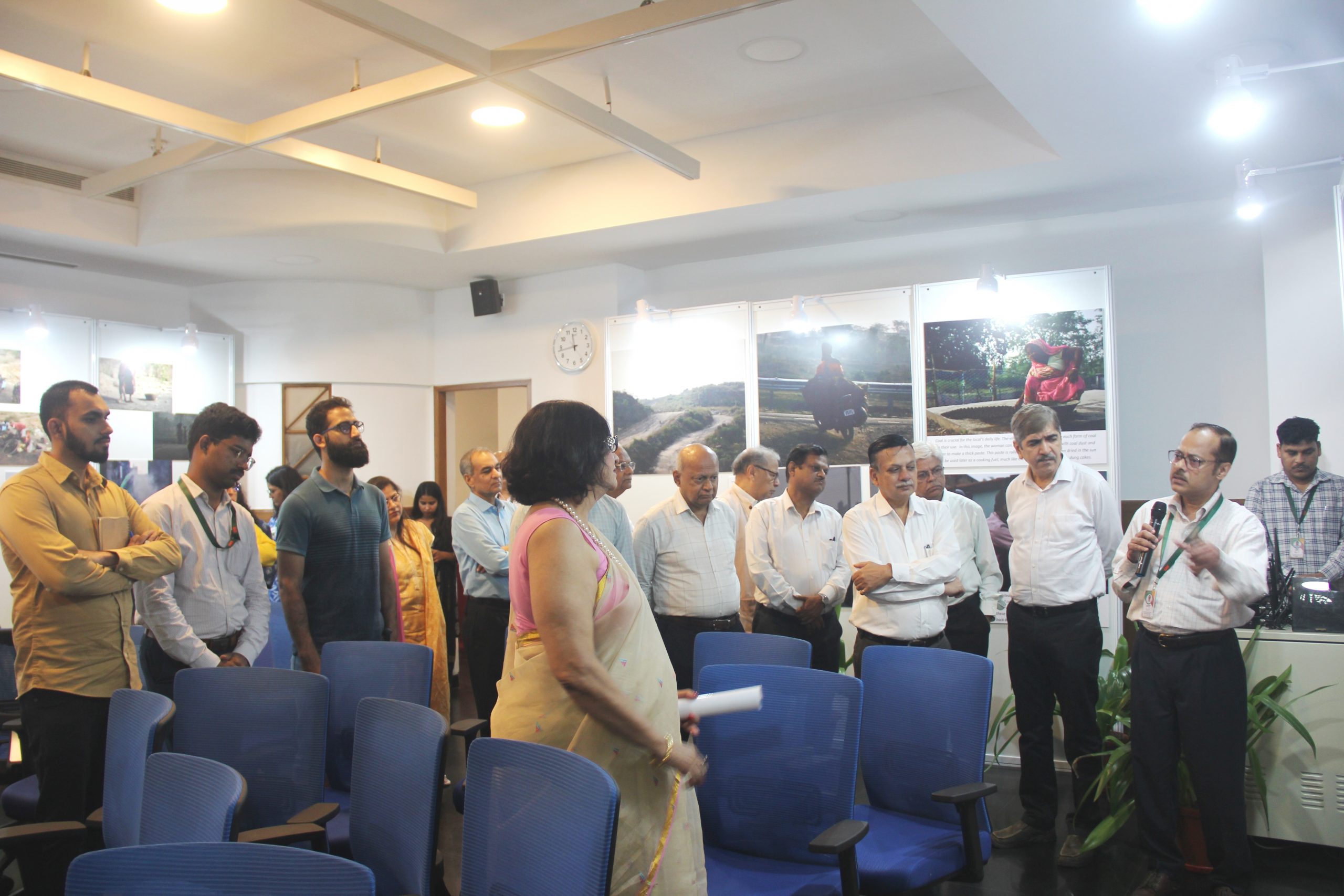
The photo exhibition, “Coal Dependence: Lives in an Extractive Economy,” held from July 25th to 26th, 2024, at the TERI, India Habitat Centre, brought attention to the lives of communities deeply intertwined with the coal economy. Curated as part of the “Just Transition: Understanding and the Implications of Moving Away from Coal” project, supported by the MacArthur Foundation, the exhibition showcased a series of compelling visuals that highlighted the everyday struggles of individuals engaged in coal-related activities. From extraction to transportation, these photographs poignantly captured the vulnerabilities faced by those who rely on coal for their livelihood, emphasizing the urgent need for alternative income opportunities in the shift towards cleaner energy.
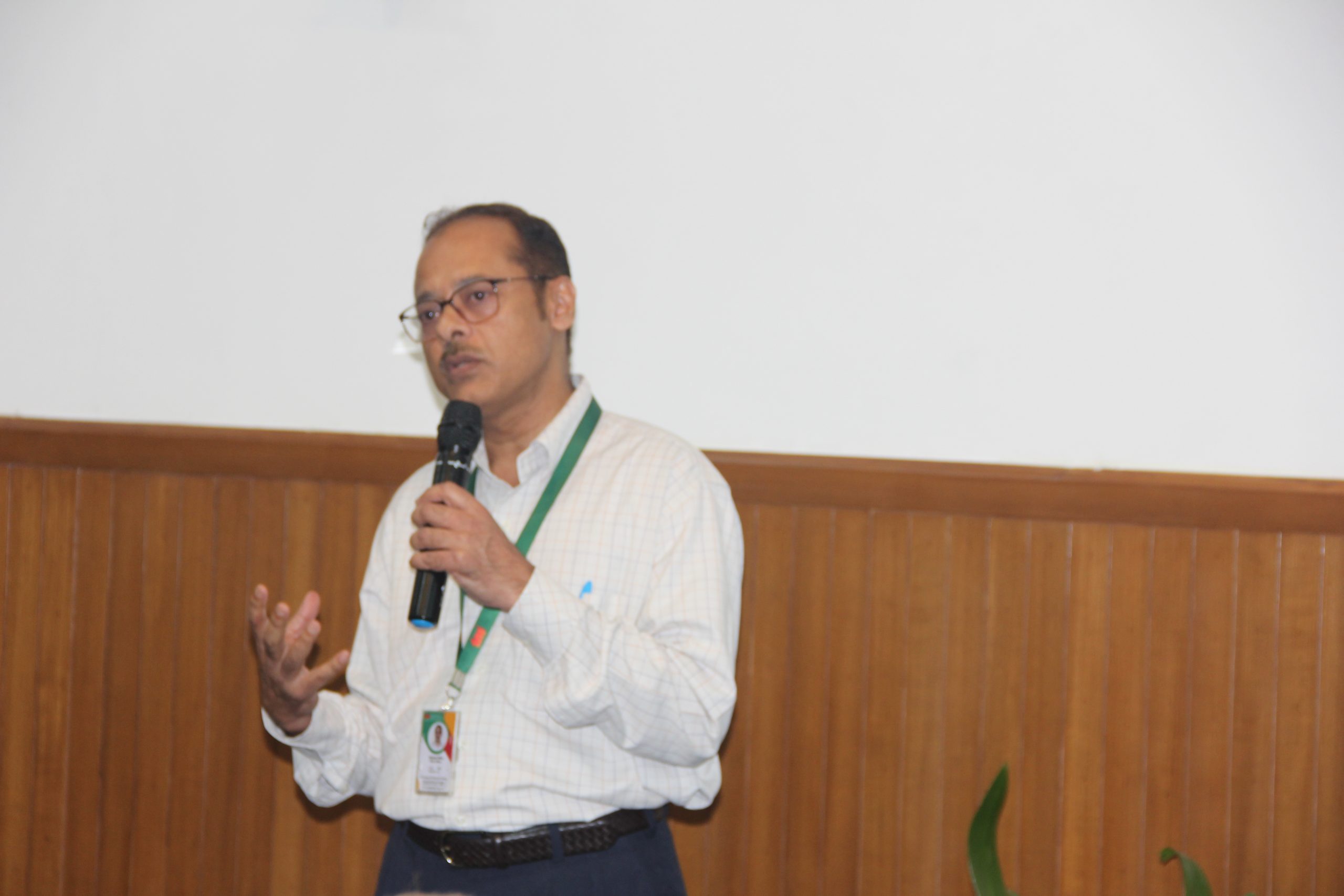
Inaugurated by Dr. Vibha Dhawan, Director General of TERI, the event also featured the release of “Voices from the Ground: A Travelogue,” documenting personal stories from India’s coal belt, and a video documentary titled “As She Changes: Seeding People-Centric Transitions in India’s Coal Belt.” The documentary highlighted efforts to empower women in Giridih, Jharkhand, by fostering entrepreneurship and building self-sustaining businesses. Together, these initiatives underscored the importance of adopting a people-centric approach in the energy transition, ensuring that those most affected by the shift from carbon-intensive energy sources are supported and included in the transition to a sustainable future.
Event Gallery
Leave a Reply
LABOUR INFORMALITY IN THE COAL PRODUCING GEOGRAPHIES IN INDIA: ISSUES AND PERSPECTIVES
0 Comments
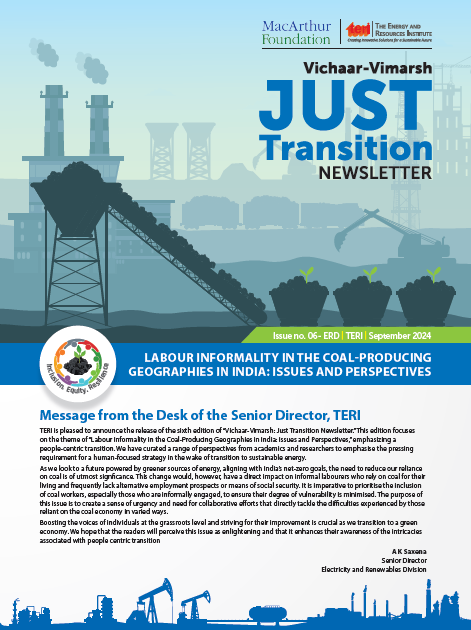
This edition focuses on the theme of “Labour Informality in the Coal-Producing Geographies in India: Issues and Perspectives,” emphasizing a people-centric transition. We have curated a range of perspectives from academics and researchers to emphasise the pressing requirement for a human-focused strategy in the wake of transition to sustainable energy.
As we look to a future powered by greener sources of energy, aligning with India’s net-zero goals, the need to reduce our reliance on coal is of utmost signfi cance. This change would, however, have a direct impact on informal labourers who rely on coal for their living and frequently lack alternative employment prospects or means of social security. It is imperative to prioritise the inclusion of coal workers, especially those who are informally engaged, to ensure their degree of vulnerability is minimised. The purpose of this issue is to create a sense of urgency and need for collaborative eff orts that directly tackle the diffi culties experienced by those reliant on the coal economy in varied ways.
Event Gallery
Leave a Reply
Just transition framework for a sustainable future in india’s coal mining regions
0 Comments
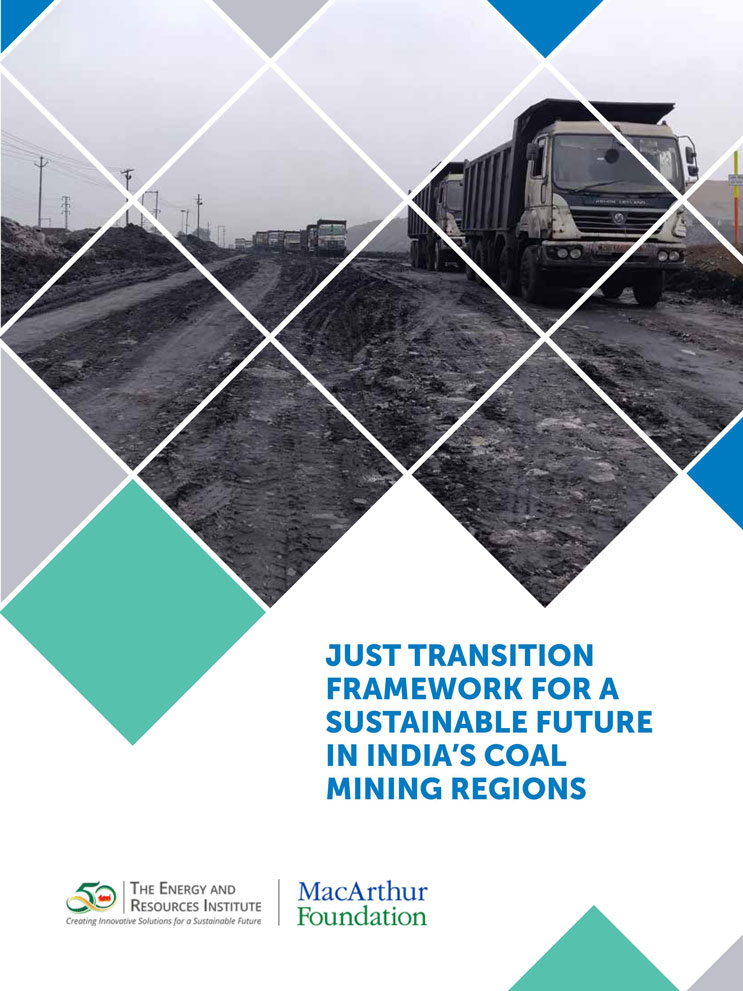
As the world grapples with the pressing challenges of climate change, there’s an increasing emphasis on transitioning from fossil fuels to sustainable energy sources. India being one of the largest producers of coal – a significant contributor to global carbon emissions – stands at the forefront of this transition.
India’s Unique Position: India, with its vast coal reserves and a significant portion of its energy derived from coal, faces a unique set of challenges and opportunities. The transition is not just about reducing emissions but also about ensuring the socio-economic wellbeing of communities dependent on coal.
The Imperative of a Just Transition: A mere shift from coal to cleaner energy sources isn’t sufficient. The transition must be ‘just,’ ensuring that it is equitable, inclusive, and considers the multifaceted impacts on workers, communities, and the environment.
Purpose of the Report: This report delves into the principles, and strategies to ensure a Just Transition in India’s coal sector and suggests a Just Transition Framework for India’s Coal Mining Sector. Drawing from historical contexts, global best practices, and India’s unique challenges, it provides a comprehensive roadmap for stakeholders at all levels of governance in India.
Event Gallery
GROUND SCENARIO IN SARANGIJHARIA IN SUNDARGARH (ODISHA) A REFLECTION ON POSSIBILITIES AHEAD
By Ayushi Saharan, MA Sustainable Development Practice student at TERI SAS, based on her field visits during an internship at TERI
0 Comments
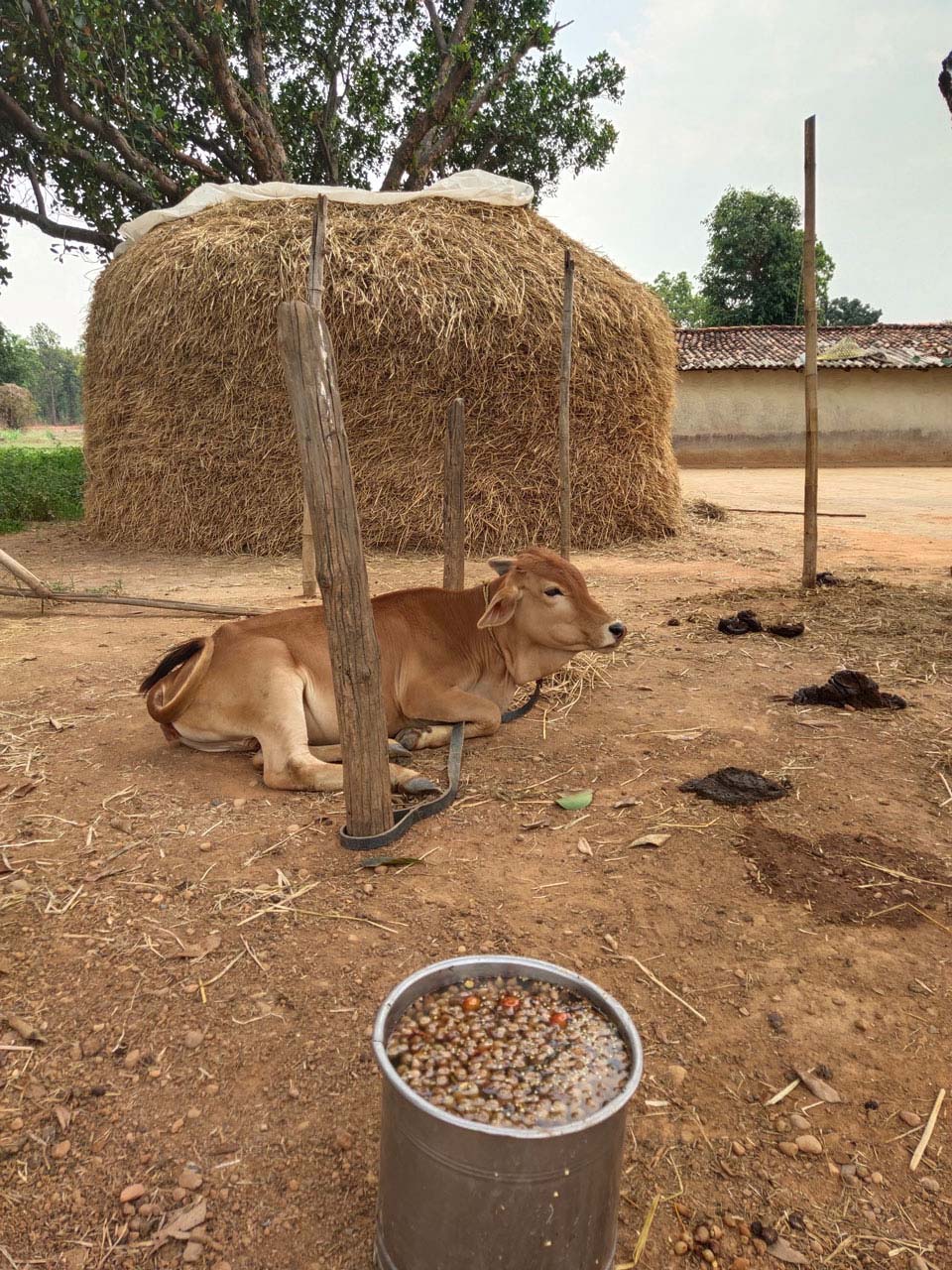
As we arrived at Sarangjharia, a village about 12 kilometers away from coal mine, we found the locals gathered around a tree with baskets in their hands, waiting for a man climbing the tree in front of us to get them some jackfruit. This is symbolic of the quiet and simple life that people live in the village which is not yet claimed by any mining companies and hence the area remained untouched by any major industries as yet and the village coexist with nature.
According to the villagers, while the majority are engaged in agriculture, one-fourth of the residents are engaged in temporary labour work at MCL. The fact that most of the mine related work is outsourced, the local labour force is drawn from the surrounding villages by the contractors. Given the short duration of employment, fear of exclusion and losing the chances of wages earning opportunity, and due to the lack of alternative employment opportunities around, locals often accept what they are offered. Ironically the poor and uneducated labour force are hardly aware of the nitty gritty of CMPF (Coal Mine Provident Fund) and neither do they have the courage to to inquire about CMPF funds and other deductions from their wages during this short-term engagement by the contractors. Owing to blocked opportunities the labour force complies with norms imposed by the contractors and hardly get a chance to voice their grievances. In the informal labour sector they lack any safety net and hence remains vulnerable. Basic rights of rural populace in and around the coal belt are often denied and dignity gets compromised. It raises questions about access to fair wages, safety net, social security system, quality education and health opportunity, and access to healthy work environment. Over dependence on coal and mono-industry also creates a monopoly and in a way that it restricts growth of other livelihood choices and its market promotion. A balanced view of diversified livelihood options creates market opportunities, enterprises, offers greater choices and competition across multiple players who engage labour and this also provides a space for bargaining and an urge for fairer practices in labour engagement.
An important alternative source of income for the locals comes from forests. Collection of mahua flowers and kendu leaves fetches households an average income of 10,000-30,000 rupees within 1-2 months. The collection is usually done by women and children, bundles are made by men and collected by the forest department for making secondary forest based products.
Agriculture, however, is the main source of income of the village. But it has suffered primarily due to labour unavailability. While the locals can offer 200 rupees as daily wage to work on the fields, MCL offices offer 300 rupees. Therefore, residents prefer to engage in labour work rather than working on fields. However, the older generation and women play an active role in keeping agriculture alive in the village. The staple crops sown and produced are corn, rice, and seasonal vegetables. The fields are rainfed, and surplus is sold to the local weekly market. While schemes like MGNREGA is functional in the village, Ujjwala, Swacch Bharat, Ayushman Bharat, PMJAY, health card issued by state government, and other policies linked to farmer’s welfare doesn’t seem to be reaching the people in the area. In a way, people lack the knowledge about several such schemes and hence could not benefit from these schemes.
Today’s youth in these villages are often allured to pick up non-agricultural wage labour particularly in any coal dependent industry settings. Young boys of Sarangijharia are also known to migrate in groups to cities like Goa for work in fishery sector, work for six to seven months, and return back with the earned income (about 30000-40000) only to spend it away on alcohol. Therefore, the money earned is hardly invested in the region in a productive manner.
The problem of alcoholism is said to be further aggravated by the mining activities given the influx of migrant truck drivers from different states who drive up the demand for alcohol. In the village itself the residents indicated that some households make alcohol using chemicals to derive some additional income. Several cases of loss of young lives owing to consumption of country made liquor have been reported.
Coal industry, MCL in this case and DMF can play crucial role in mapping vulnerable pockets, carrying out a socioeconomic baseline, assessing skill, resource and information gaps, and develop a blueprint in consultation with the credible research institutes and development practitioners to enhance the living condition of people living in and around the coal belt. As part of the Just Transition initiative, it would be logical to impart new skills, enhance sustainable agriculture, demonstrate and encourage adoption of greener practices in manufacturing of local products, and promote diversified livelihood strategy, enhance financial inclusion, health awareness and safety nets. All in all, such measures will help minimize vulnerability, build resilience and improve the quality of life of the poor people living in and around the coal belt. The plans must include those who are engaged in coal sector as contractual labourers and their families but also others who are daily wage earners, agricultural workers, who depend on others’ land and also other socially backward sections who often get alienated or left behind due to their backwardness.
Event Gallery
Leave a Reply