Moving Away From Coal



0 Comments
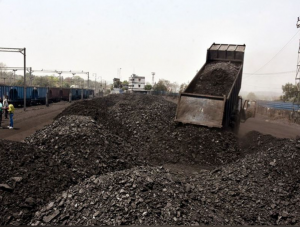
FOR decades, coal has powered India’s economic growth, illuminated millions of homes and
underpinned country’s energy security. Yet, as the perils of climate change intensify and extreme
weather events become more frequent, the country faces a difficult question: how does it move away
from the very resource that has underpinned its economic rise?While ensuring energy security
remains indispensable, commitments to achieving net-zero emissions by 2070 have emerged as
equally critical national priority. Beyond such commitments, the emergence of carbon entrenched
trade measures like Carbon Border Adjustment Mechanism (CBAM) has become an additional
compulsion to drive the country towards a low carbon growth trajectory. While India has repeatedly
reaffirmed its climate commitments on the global stage, however, the most challenging part of this
commitment is centered around the distortions resulting from distancing away from a coal-based
economic structure and system.Switching away from coal: easier said than doneThe drive to switch
away from coal as well as finding a cost-effective and an efficient alternative to coal is not only a
difficult choice, but also a time- consuming proposition. Coal contributes around 70 per cent of
electricity generation in India and 55 per cent of primary electricity supply. Beyond concerns of energy
security, the prospects of widespread job and livelihood losses across the coal value chain pose a
particularly serious challenge. As per estimates, around 13 million workforce depends on the coal value
chain, directly and indirectly. Navigating the coal phase down is a complex process, therefore it is even
more imperative to carefully map the sectors, geographies and industries that are most at risk of such a
coal retreat.Coal generates substantial revenue for government. It stands as the single largest
contributor to railway freight, around 49 per cent of total freight income. Additionally, coal sector
contributes over Rs 70,000 crore annually to government through royalties, taxes and other
levies.Once coal retreats, filling such void will require significant efforts as this fossil fuel does not only
fuel the power sector, it has invisible economic footprints across sectors and geographies. It presents
India an opportunity to undertake systematic assessment of which sectors and geographies are
dependent on it and to what extent.Indian industrial sector contributes one-fourth to India’s Gross
Domestic Product; however, it also emits 30 per cent of national emissions. This black diamond has a
significant share of around 67 per cent in total fuel consumption in energy intensive industries.
National climate commitments and emergence of regulatory regimes such as CCTS (Carbon Credit
Trading Scheme) and ESG (Environmental, Social, and Governance) regulations such as BRSR
(Business Responsibility and Sustainability Reporting) along with international trade measures such
as CBAM are likely to affect the competitiveness of Indian industries in case of continued reliance on
coal.Hence, India is on the horns of a dilemma – till when to continue with coal and start discontinuing
at what rate. So far most of the growth of renewables is supplementary in nature, taking care of
additional energy demand.Emerging risk of stranded assets; long shadow of coal sectorThe energy
transition is not merely an environment challenge per se but also a question of development for the
country. The complexity of switching away from coal accentuates as coal is mostly used for critical
sectors of importance for the country such as power sector, steel and cement sector. Power sector uses
almost 1/4th of coal, iron and steel sector uses about 10 % of the coal and aluminum sector makes use
of 7 to 8 % of the coal. While coal gasification offers an alternative cleaner option compared to direct
use of coal, however, repurposing coal use in the critical sector requires structural shifts and could
produce stranded assets.In the Indian context, substantial investments have been made in coal mines,
thermal power plants and coal-based industrial technologies, many of which are designed to operate
for several decades. Over the past five years alone, capital expenditure within coal sector in Public
Sector Undertakings have averaged around Rs 18,255 crore annually.A faster than anticipated
transition away from coal could render these assets underutilised or economically unviable. This risk is
particularly acute for India’s coal fleet, most of which are young. Stranded assets risk in the industrial
sector is also pronounced as sectors such as steel, cement, and aluminium have invested heavily in
coal-based infrastructure, including captive coal power plants, boilers, furnaces and long-term coal
supply arrangements. For instance, available statistics show that close to 60 % of the captive power
plants (CPPs) run by using coal and repurposing of such plants is not easy as these plants are mostly
young and repurposing would lead to significant loss of their asset values. Similarly, replacing coal in
hard-to-abate sectors like steel and cement could be highly challenging.What India must doIndia’s
energy transition cannot be reduced to replacing one source of energy with another. It must also
involve managing the social, economic and fiscal consequences of coal decline. It is crucial to design
the sectoral trajectories for the net zero, instead of relying on the uniform target for the country. The
rate and speed of transition shall be based on the sectoral configurations and sectoral specificities, to
better cater to the sectoral needs.This requires carefully crafting the transition pathways and deciding
the rate of transition. The most important consideration is developing a national coal dependency
atlas, preparing sector specific transition pathways and diversifying coal-dependent regional
economies These should therefore become central pillars of India’s transition strategy. Without such
planning, the costs of coal retreat may be unevenly distributed, undermining both climate ambition
and developmental gains.Views are personal
Event Gallery